
VN EN

logo_tram.jpg

ISO 9001:2015

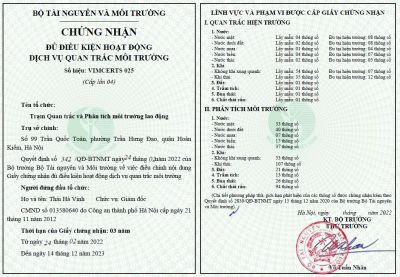
VIMCERT 025

 NATIONAL WORKING ENVIRONMENT MONITORING STATION

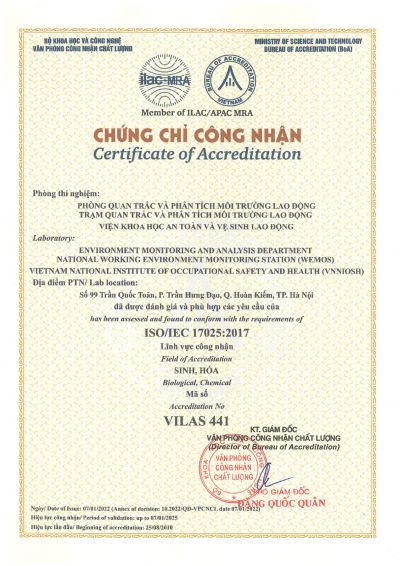
vilas1.png

VILAS 441

WEMOS-KOSHA-09.9.2024 JISHA 26.4.2024 Hop_tac_KOSHA_-_VNNIOSH_ Tham_quan_PTN_en Banner_dai_hoi Quan-trac-moi-truong-en Quan-trac-moi-truong-lao-dong-en HS-tac-dong-MT-en
Home

Science - technology & environment

Spatial and seasonal changes in levels of perfluoroalkyl acids (PFAAs) in surface water and sediment from a typical paper-recycling area in Vietnam
  • Mô tả Perfluoroalkyl acids (PFAAs) have been increasingly reported in the aquatic environment, but integrated evidence linking their occurrence in surface water and sediment in paper-recycling areas remains limited. This study outlined the levels, spatial and seasonal changes of selected PFAAs in surface water and sediment from Phong Khe, the largest paper-recycling area in Vietnam. Surface water (n = 40) and sediment (n = 25) samples were collected in dry and rainy seasons, extracted using solid-phase extraction (SPE), and analyzed for 12 PFAAs by liquid chromatography–tandem mass spectrometry (LC–MS/MS). Short-chain PFAAs (C6–C8) dominated in surface water, whereas long-chain homologues were more abundant in sediments. Concentrations of PFOS in more than 70% of surface water samples exceeded the European Union environmental quality standard. Total PFAA concentrations in surface water ranged up to 88.4 ng/L, and sediment concentrations ranged up to 6.32 ng/g, with the highest levels in drainage channels receiving paper-recycling effluents. The results showed a spatially consistent decrease in PFAA levels with increasing distance from the discharge sources, in the following order: drainage channels > Ngu Huyen Khe River > Cau River. Principal component analysis (PCA) of the five most frequently detected PFAAs revealed distinct patterns between drainage channels and rivers and indicated seasonal changes in the relative influence of local effluent inputs and riverine dilution. Finally, although ecological risks were generally within acceptable thresholds, some sensitive species, such as Chironomus plumosus, still showed low to moderate risk
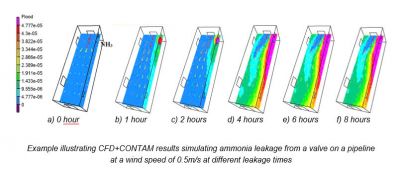
  • Simulating ammonia release in the working environment using CONTAM software: When technology helps to see invisible risks
  • Mô tả Ammonia (NH3) is a familiar chemical compound, widely used in many industries such as fertilizer production, food processing, refrigeration industry, chemicals, etc. Although it plays an important role in production, due to having characteristics like rapid evaporation, strong dispersion and high toxicity, ammonia is considered one of the chemicals that pose many potential risks to workers’ health if not strictly managed and controlled in the workplace.
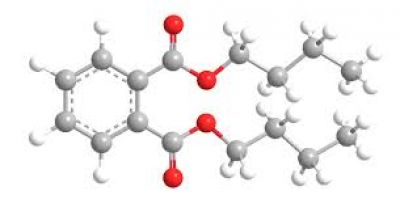
  • Impacts of di-n-butyl phthalate (DBP) exposure on the health of workers in the rubber processing industry: A warning from epidemiological research in the Central region
  • Mô tả In the rubber processing industry, di-n-butyl phthalate (DBP) is a compound commonly used as a plasticizer, contributing to the flexibility of products. However, few people know that DBP is a substance that can negatively affect the health of workers if they are exposed frequently and for prolonged periods. This is one of the concerning potential hazards in manufacturing facilities in the Central region – where the rubber industry is rapidly developing. In reality, working conditions in rubber processing factories are often characterized by high temperatures, a strong chemical odor, and arduous working conditions. Although physical safety factors have been improving, the risks from chemical exposure like DBP have not received adequate attention. Consequently, a field study conducted by the Branch of National Institute of Occupational Safety and Health in the Central Vietnam, VNNIOSH, at two rubber production facilities has provided a clearer insight into the impact of DBP on the health of workers.
  • Read more>>

    Search

    Video

    Picture

    IMG_8492 IMG_8515 F IMG_8488 IMG_8505 wemos 3 wemos 4 wemos 5 wemos 2 IMG_8534 wemos 1

    Contact information

    NATIONAL WORKING ENVIRONMENT MONITORING STATION

    Address: 99 Tran Quoc Toan str - Cua Nam Ward, Ha Noi city.

    Tel: (+8424) 22172473; 22172480 - Fax: (8424) 3822 3011

    Hotline: 0941042838

    Email: moitruonglaodong@vnniosh.vn 

    Website: https://Wemos.vn/

    Establishment decision agency: Vietnam General Confederation of Labor.

    Direct management agency: Vietnam National Institute of Occupational Safety and Health.


    Where to find us

    Information on the portal is only for reference, not of legal value.

    • zalo-circle